Blue-Painted White Porcelain Hexagonal Bottle
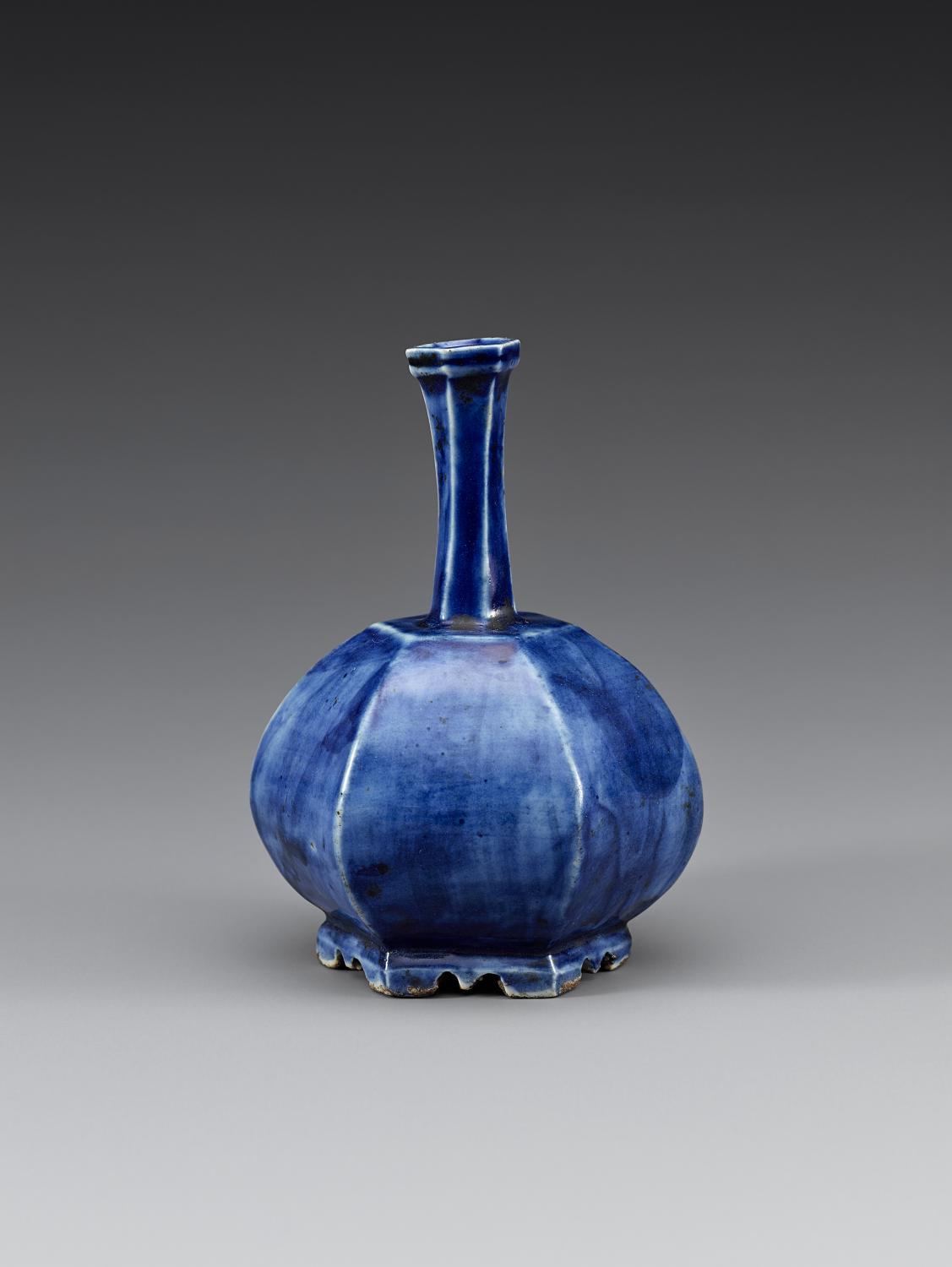
From the 18th century onward, faceted white porcelain, its corners cut to form angles, was made in quantity, and among these, faceted bottles were especially common. Such bottles were closely tied to the enjoyment of wine and tea and offered great decorative effect through their many planes; in the 19th century, not only the body but also the mouth and foot were made angular, and feet imitating the openwork aprons of wooden furniture were sometimes added. The hexagonal and square bottles were tinted with cobalt blue, apparently to evoke the blue-glazed wares of Qing China, and were also decorated with such motifs as chrysanthemums and linked swastika (manja) patterns. The vogue for faceted bottles reflects the influx of goods from Qing China, where a luxurious culture flourished; bottles like this, with their distinctive and exotic decorative effect, were used by the classes able to enjoy such refined culture.
Open the app — audio guide · artifact worldcup · MBTI